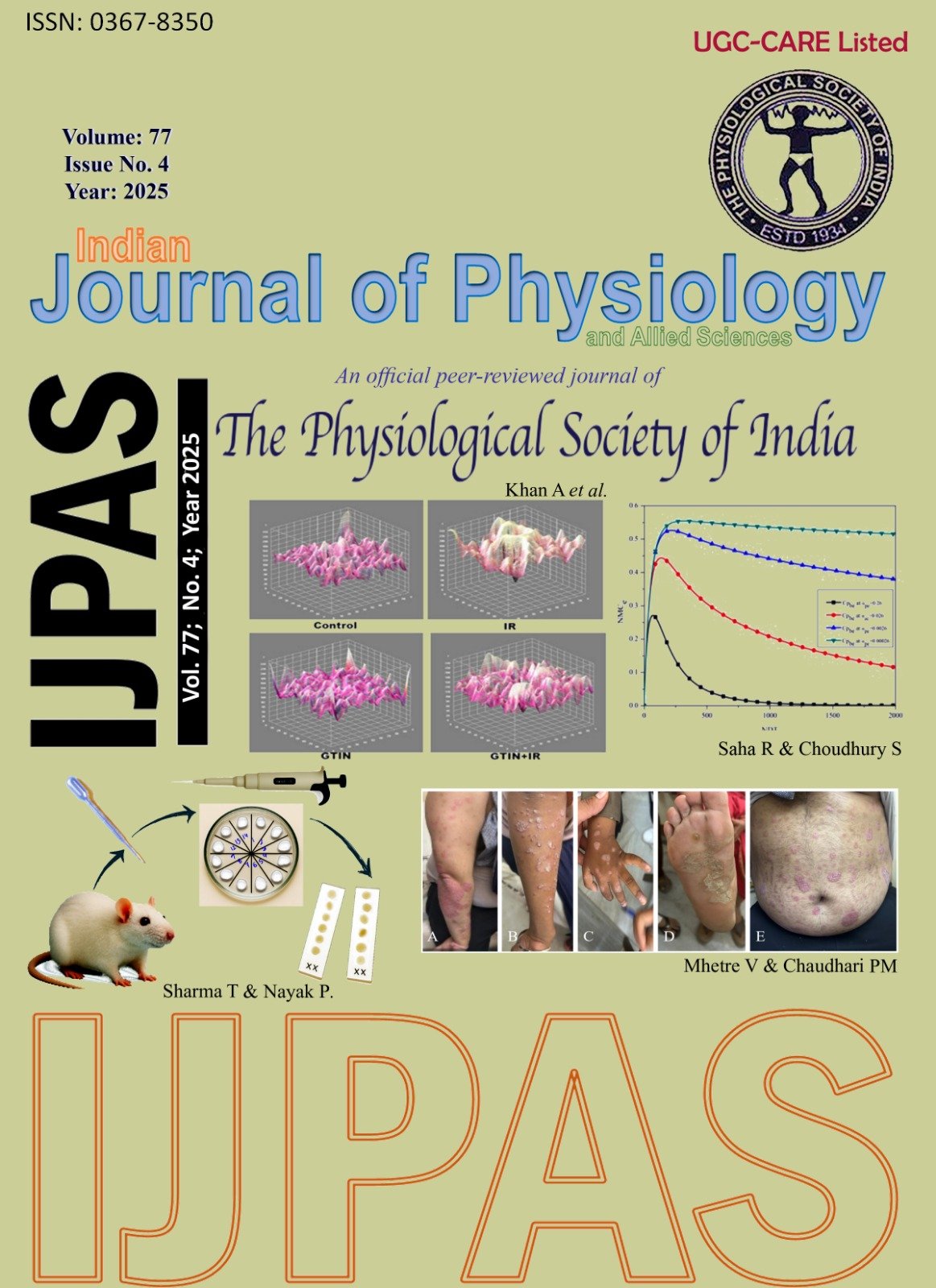
Gossypetin ameliorates radiation-induced oxidative stress in the testis and lymphocytes
DOI:
https://doi.org/10.55184/ijpas.v77i04.515Keywords:
Gamma Radiation,, Gossypetin, Phytochemical, Testis, LymphocytesAbstract
Background: To explore the radioprotective action of gossypetin (GTIN) against gamma (γ) radiation-induced oxidative stress of the radiosensitive organ, testis, and lymphocytes. Materials and Methods: GTIN, a cost-effective and readily available phytochemical, was administered at 30 mg/kg body weight for three consecutive days before a 5 Gy γ radiation exposure. The radical-scavenging ability of the GTIN was considered in whole-body irradiated mouse models. The study included various physiological and cellular assessments, including biochemical analysis, the comet assay, the DNA fragmentation assay, and histopathology. Results: γ radiation-induced oxidative stress, evident through increased lipid peroxidation and reduced antioxidant markers in both the testis and lymphocytes. Histopathological analysis revealed radiation-induced structural changes in the testes, and the comet and DNA fragmentation assay confirmed a decrease in white blood cell (WBC) count due to radiation-induced DNA damage. However, pre-treatment with GTIN ameliorated these radiation-induced alterations in both lymphocytes and the testis. Conclusion: GTIN’s radioprotective mechanism is attributed to the ability of the C ring within gossypetin, to quench the lone pair of electrons in free radicals generated by radiolysis. These chemical properties of this potent phytocompound safeguarded the cells from radiation-induced damage.
Downloads
Published
How to Cite
Issue
Section
License
Copyright (c) 2025 Amitava Khan, Krishnendu Manna, Dipesh Kumar Das, Chinchu Bose, Asoke Banerji , Sanjit Dey

This work is licensed under a Creative Commons Attribution-NonCommercial-NoDerivatives 4.0 International License.